
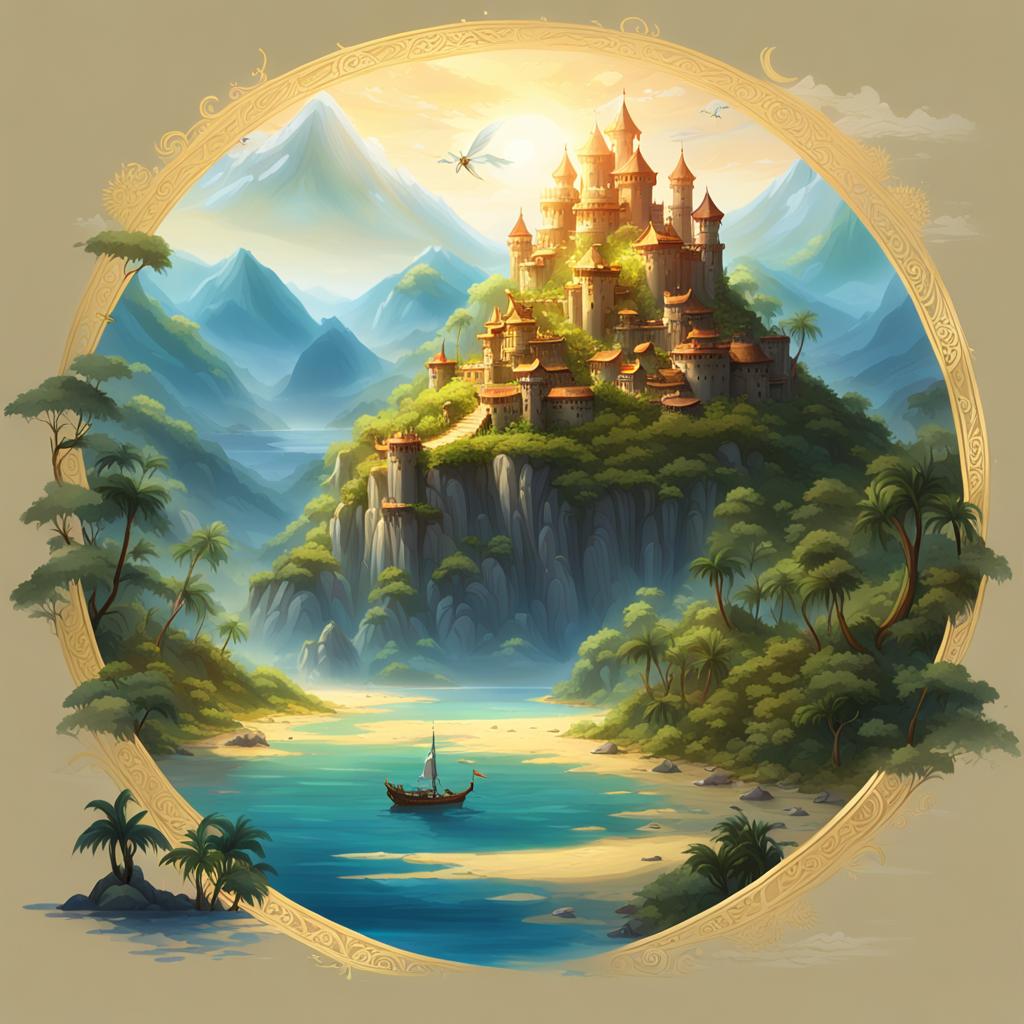
Before we start with the 7 steps of building, here is a little more about myself and The Mythical Realms of Dracon Island, the fantasy world I created.
Welcome, fellow readers and writers, lovers of all fantasy and romance. Writing was never a dream I thought I could follow. It was always drilled into us that we had to find a job that could pay the bills. I woke up one morning with a story in my head and ever since I've pursued that dream. Nothing comes easy and writing has been a lot of trial and error, courses, videos, and good and bad advice. Keep following your path, if you are reading this there is a story waiting to be written in your heart.
I accidentally built a fantasy realm and called it Dracon Island, it was created for a series of contemporary romance books for dragon shifters. As a beginner writer I read somewhere romance books were the easiest to sell and the best place to start. I loved reading Dragon Shifter books and wanted to start with something I know. I wasn't content with only romance, my writing wanted to lean into the fantasy side of it more. The books started with outlines for the stories of four dragon shifter brothers and their father. An island seemed like a good fit to allow the secrets of a dragon shifter society. It evolved into the backdrop for a historical romance fantasy series named The History of Dracon Island with its own lore and stories. I never planned for the island to become a world of its own and since I started writing I've found a few helpful resources to help when building a fantasy world.
Creating a fantasy world from scratch is one of the most thrilling and challenging parts of writing in the fantasy genre. As writers, we get to play the roles of architect, and historian, crafting landscapes, cultures, languages, and legends. But worldbuilding isn’t just about slapping together a few fantastical elements and calling it a day, this I learned the hard way. It’s about creating an immersive environment that feels as real to the reader as our own world. Here’s a deep dive into how to approach building a fantasy world, exploring the essential components and how to tie them together into something extraordinary.
1. Starting with the Foundation: Geography and Climate
Every world begins with its terrain and weather patterns, so start by sketching a rough map. My map of Dracon Island started with a contemporary bustling island, with a firehouse and ferry connecting to the mainland. Luxury houses on the shore and warehouses used for fishing. The historical romance Dracon Island had to allow more open space for dragons to co-exist with humans, but I had to use the contemporary world as a reference.
In my current work in progress, A Felidavian Myth, I had the novelty of starting the world-building, as it should be and not as the stories unfolded. This time, I started by considering the shape and layout of continents, oceans, mountains, deserts, and forests. I placed the buildings and camps at sights better complimenting the story and created better visuals in my scenes.
Your world’s geography and climate can add layers of complexity to its inhabitants and their lifestyles. Perhaps a desert kingdom has developed advanced irrigation techniques, or a frigid northern realm has a myth about fire spirits. Every land can add texture and adventure to your story.
2. Creating Unique Cultures and Societies
Fantasy worlds thrive on unique and diverse cultures. Imagine how different environments could lead to distinct languages, religions, customs, and social structures. How does each society in your world view family, gender roles, education, and work?
Consider how technology and magic play roles in these societies. Are there kingdoms ruled by wizards or places where magic is forbidden? Is there advanced technology like steam-powered machinery, or does the culture rely on natural, mystical forces? Build societies that contrast and complement each other, creating a world as diverse as it is vibrant.
I tried implementing diverse cultures and societies by creating a dragon shifter society, keeping their secrets from the outside world.
The future of Dracon Island is always in question as good and evil from the future and the past collide in different ways, keeping the stories interesting.
3. Developing a Rich History and Mythology
The past is a powerful influence on any culture. To make your world believable, imagine a detailed history. Think of wars, alliances, legends, and lost cities - in the Felidavian, there was a myth about flying lions being the most prestigious companions for a warrior.
What legends do the people of your world share? What do they fear, and what do they worship? Inventing mythological tales and historical events gives your world roots and makes it more believable.
4. Language and Names: Building Authenticity
Language can lend authenticity to your world. You don’t have to invent a full language like Tolkien, but a few unique words and names can go a long way. Most of my stories has unique names, some of which have different meanings in different languages. I am still learning to use different languages but try to pay attention to the sounds of different regions and cultures. Maybe the names of places in one region are harsh and consonant-heavy, while another uses soft, flowing syllables.
5. Magic Systems and Rules
Magic is often the heart of fantasy, but it needs rules. Define how magic works, who can wield it, and what limitations exist. Is magic accessible to all or a rare gift? Dracon Island has the dragons in the center of the magic system and all magic in these worlds stems from them.
A well-thought-out magic system grounds your world. It prevents magic from becoming a plot-solving tool and instead allows it to be an integrated part of the story.
6. Balancing Worldbuilding and Storytelling
As writers, it’s easy to get swept away by worldbuilding and forget about the story. Readers don’t need to know every historical event or the detailed ecosystem of a mountain range. I tend to overdevelop some scenes and feel wronged after my editor cuts them down. Keep the parts you cut, don't delete them. You may want to use it for later stories or special chapters available for fans. I wanted the reader to know about every aspect of the world, but worldbuilding should always serve the story, not overshadow it.
One approach is to use “show, don’t tell.” I received this advice from my editor, and I'm still trying to perfect this skill. Instead of describing your world in detail, let readers experience it through the characters’ actions and dialogue. If a character is from a war-torn region, let that influence their perspective and choices, rather than laying out the entire history in an info dump. Let the characters experience the world and the readers will be pulled in along with them.
7. Bringing It All Together
Worldbuilding is a process that often evolves with the story. Don’t feel pressured to know every detail before you begin writing. Sometimes the world takes shape as your characters journey through it. Allow yourself the freedom to discover your world along the way, adjusting and refining as you go. Keep notes, either on paper or digital. Believe me, life happens, and although we try to write every day, sometimes we don't get to write for a time. Keep your ideas for when you have to refresh your memory. Some planning and descriptions or views can inspire a whole new part of your world.
When done well, worldbuilding immerses readers in a realm that feels vast, mysterious, and alive. They’ll want to return to your world again and again, not because it’s filled with fantastical elements but because it feels real—real enough to believe in, to care about, and to explore alongside your characters.
If the world becomes real for you, and you like to return there to write your stories, it most likely will feel real for your readers as well. You'll have readers loving the world you created, as much as you loved building it. There is nothing better than receiving a message from a reader telling you how they enjoyed your book.
Keep at it and enjoy the journey. Remember, nothing in life comes easy.